RECENT WEBINARS
Purchase individual webinars here or get access to all of them and future ones over the next 12 months in our Webinar Club
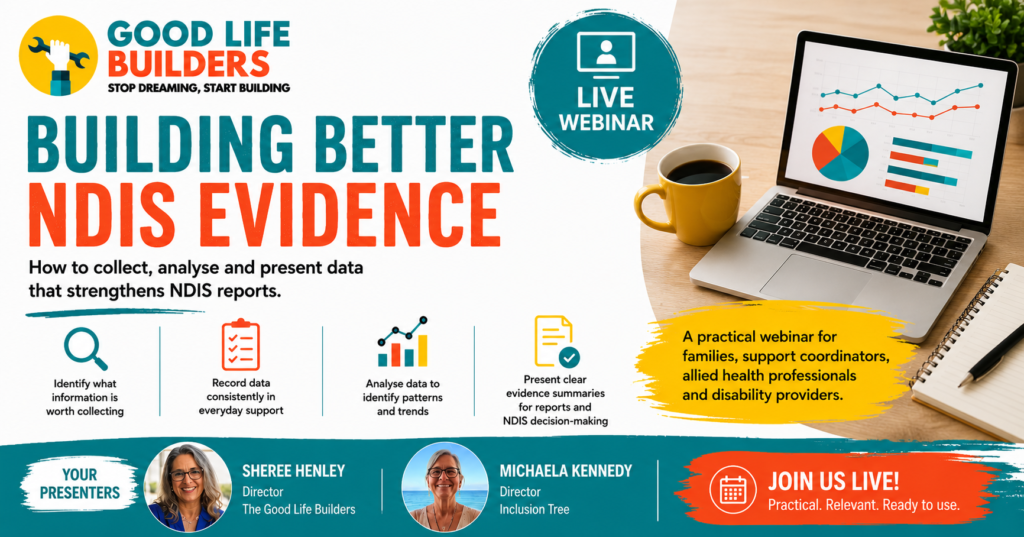
Building Better NDIS Evidence
Strong NDIS reports rely on strong evidence. This practical webinar will show you how to:
- Collect meaningful data about disability-related support needs.
- Record information consistently and effectively.
- Identify patterns and trends in everyday support.
- Turn support information into clear evidence summaries.
- Provide useful evidence for Functional Capacity Assessments, therapy reports and Home and Living reports.
- Build a stronger evidence base for NDIS planning and reassessments.
- Access practical templates and tools in the included resource pack.
Who is it for?
This webinar is suitable for:
- Family members and carers
- Support coordinators
- Allied health professionals
- Disability providers
About the Presenters
Sheree Henley — Director of The Good Life Builders, with 30+ years’ experience in business analysis, systems design and governance. Sheree combines her professional expertise with lived experience supporting her adult son with complex disability.
Michaela Kennedy — Director of Inclusion Tree and an experienced NDIS Support Coordinator specialising in complex support needs, Home and Living, plan reassessments and Administrative Review Tribunal (ART) matters. Michaela works closely with families throughout the NDIS process and understands the importance of well-organised evidence.
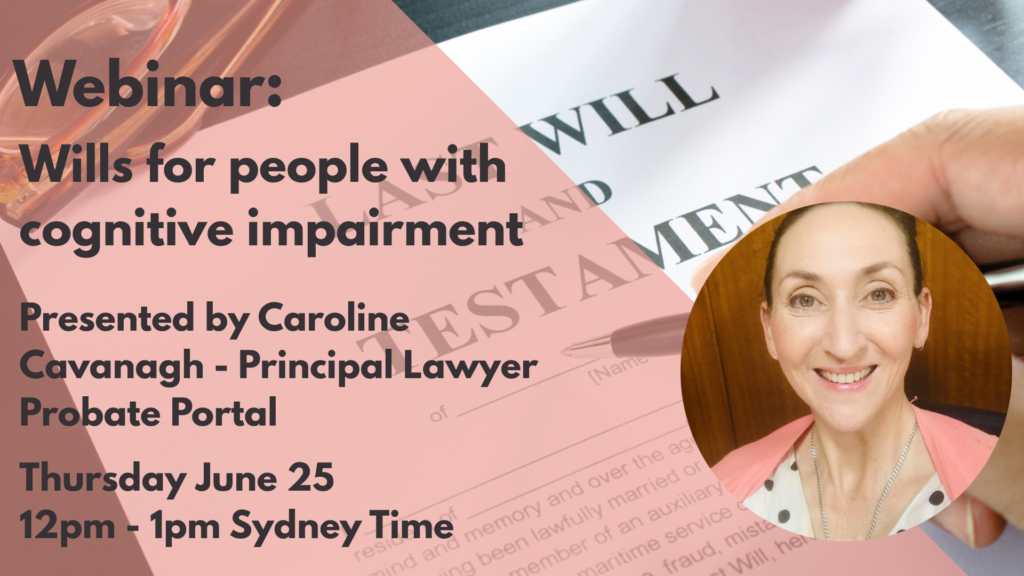
Wills for people with cognitive impairment
Join lawyer Caroline Cavanagh as she explains the legal and practical issues involved when a person with cognitive impairment is unable to make their own Will.
For families operating a family-governed “service for one”, estate planning can be an important part of securing the long-term future of the person you support. Understanding the available options can help protect assets, support future decision-making arrangements, and contribute to the sustainability of the supports and safeguards you have worked hard to build.
Topics covered include:
What is an estate?
- What does it contain and what does a Will do?
- Who can write a Will?
Who would not pass the legal capacity threshold to write their own Will? - Who assesses legal capacity?
- The intestacy rules for deceased estates where no Will is in place
- Who manages an estate when no Will is left (the priority of next of kin)
- Who can make a claim for further provision from an estate
- The process and costs of having a Will made for a person with cognitive impairment
- What kind of outcomes you might expect from a Court Will application.
Systems that Support a Good Life
Supporting a person with severe and complex disability often depends on good systems — not just good people.
Join Sheree Henley, Director of The Good Life Builders, for a practical webinar exploring how families can use systems and tools to support safe, consistent, high-quality support in a person’s own home.
This session is not a sales pitch for technology. Instead, Sheree will focus on the kind of thinking families and small support teams need when selecting and using systems — looking beyond flashy features to what actually matters in real life.
Using real examples from supporting her son Isaac through a family-governed “service for one,” Sheree will explore:
Keeping important knowledge consistent and accessible
Supporting communication and accountability across teams
Monitoring health, risks, and progress over time
Maintaining visibility without needing constant presence
Training staff consistently and effectively
Keeping support focused on the person’s good life and goals

SCHADS Compliance Part 2
• Higher duties
• 24-hour care shifts
• Excursions
• Remote work and on-call arrangements
SCHADS Compliance Part 1
Laura Cowling and Emma Dawson.
2. Pay structures, including salaries, flat rates and Individual Flexibility Agreements
3. Leave entitlements
4. Clothing and equipment allowances
5. First aid allowance
6. Travel time and broken shifts

Team culture is “how your support team actually works together day to day.”
It’s not values statements, policies or plans alone—it’s what staff experience on shift, how decisions get made, how problems are handled, and how the person being supported is treated when no one is watching.
In family-governed services for one person, poor team culture can look like:
- Inconsistent support practices
- Not sharing important information
- Defensiveness when receiving feedback
- Feedback that is delivered harshly
- Falling back on old ways and changes not being implemented
- Gossip and side conversation
- Arguments between team members
- Staff just keeping the person busy and occupied rather than valued and connected
- Tension between staff and family members when family has a constant stream of supports in their home
This practical webinar is designed for family and parent directors who employ and lead support staff. You’ll learn:
What team culture is in simple, real-world terms
Common culture challenges in family-governed services for one
How culture is shaped by what you say, do, ignore, and reward
How to identify and address a cultural issue.
Participants will leave with tools that can strengthen accountability, clarity, and trust.
This webinar will be presented by Sheree Henley, Founder and Director of the Good Life Builders. Sheree has extensive lived experience in leading teams of support workers in her son’s service for one for over 13 years, along with qualifications and experience in leading organisational behaviour and change in her work experience as a business analyst.

Managing Conflicts of Interest for Services for One
This webinar was presented by Sheree Henley, Founder of The Good Life Builders. Sheree has a Diploma in Governance and has been a Director on the board of her son’s Service for One for 10 years.
Section 80.4 of the NDIS Act 2024 describes the need to manage conflicts of interest
Section 191 of the Corporations Act also includes requirements to disclose material or personal interest.
So as directors of services for one, it’s vital that we have things in place to meet these legal obligations.
The webinar will cover:
What is conflict of interest?
What does the law say about conflict of interest?
What types of interests could there be and how could they be managed?
What kind of tools, documents, policies and procedures could we put in place to manage conflicts of interest?